
Combat Sports History
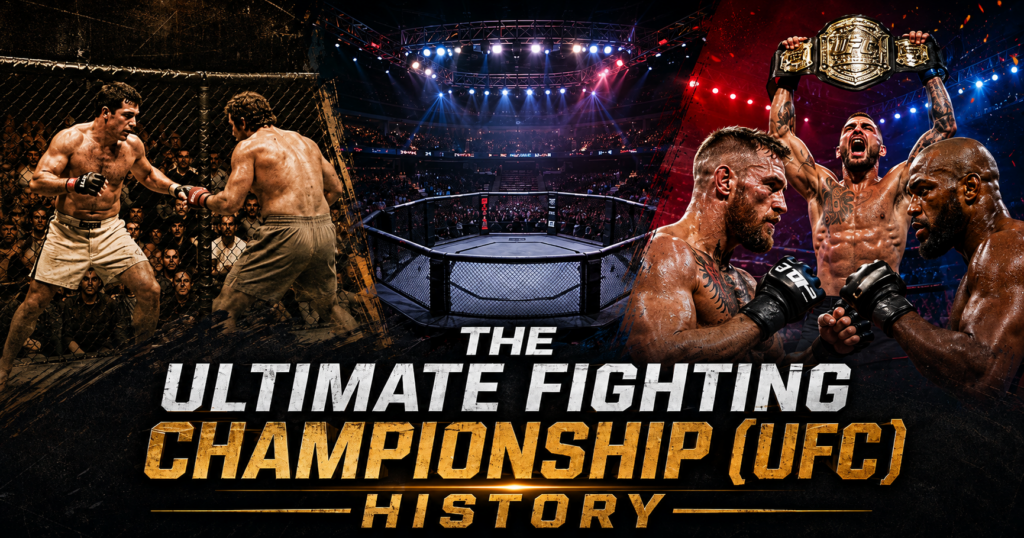
The Ultimate Fighting Championship (UFC) History
The Ultimate Fighting Championship (UFC) has experienced an extraordinary evolution since its founding in 1993, transforming from a niche event into a global powerhouse. This growth is attributed to several key factors, including innovative marketing strategies, the emergence of superstar fighters, and the rising popularity of mixed martial arts (MMA).
The Origins: A New Era in Combat Sports
Launched in November 1993 in Denver, Colorado, the UFC held its first event, UFC 1, with the goal of identifying the most effective martial art in a no-holds-barred format. Initially, it faced significant criticism and regulatory challenges, being labeled as violent and savage, which led to restrictions in several states. Nonetheless, its raw and unfiltered appeal attracted a passionate audience, particularly among combat sports fans.
Adapting for Legitimacy and Broader Appeal
To gain legitimacy and attract a wider audience, the UFC underwent major transformations in the early 2000s. In 2001, the organization was purchased by the Fertitta brothers and Dana White, who introduced a new vision. They established rules and regulations to enhance fighter safety and improve event presentation. Key reforms included the introduction of weight classes, timed rounds, and the employment of referees, which helped to position MMA as a legitimate sport.
The Impact of Reality TV
A turning point in the UFC’s ascent came with the debut of “The Ultimate Fighter” reality series in 2005. This program not only highlighted emerging fighters but also gave viewers an inside look at their intense training and personal narratives. By humanizing the fighters, the show produced relatable figures, paving the way for future stars like Forrest Griffin and Rashad Evans.
The Emergence of Superstar Fighters
The UFC’s expansion has been significantly driven by the rise of legendary fighters who have captivated audiences. Personalities like Chuck Liddell, Georges St-Pierre, Ronda Rousey, and Conor McGregor have not only excelled inside the octagon but have also become global icons for the sport. Their charisma, combined with their fighting prowess, attracted a diverse fan base and boosted pay-per-view numbers.
Conor McGregor, in particular, transformed the landscape with his bold persona and knockout ability, turning UFC 196 and UFC 205 into record-breaking events. His knack for promoting fights and engaging fans through social media has set new benchmarks in athlete marketing within combat sports.
Global Growth and Digital Engagement
The UFC’s strategic initiatives and international expansion have also contributed to its success. Events have been hosted in countries such as Brazil, China, and Australia, allowing the organization to reach new markets. The partnership with ESPN in 2019 marked a significant shift in broadcasting, bringing MMA to a wider audience through cable and streaming platforms.
Social media has been instrumental in this growth, enabling the UFC to interact with fans in real time. Platforms like Instagram, Twitter, and YouTube allow fighters to build their personal brands and foster a sense of community among fans.
Looking Ahead: The Future of the UFC
Today, the UFC is a multi-billion-dollar enterprise, featuring a diverse lineup of fighters and a global following. Its transformation from a controversial event to a respected sport is a testament to strong leadership, the allure of its athletes, and effective branding strategies. As the organization continues to expand and adapt to new technologies and shifting fan preferences, its future looks promising.
The UFC’s journey is more than just the growth of a sports organization; it reflects a cultural shift toward the acceptance of mixed martial arts as an exciting and legitimate sport. As fans eagerly await what comes next, it’s clear that the UFC has firmly established itself and will continue to thrive in the years ahead.